
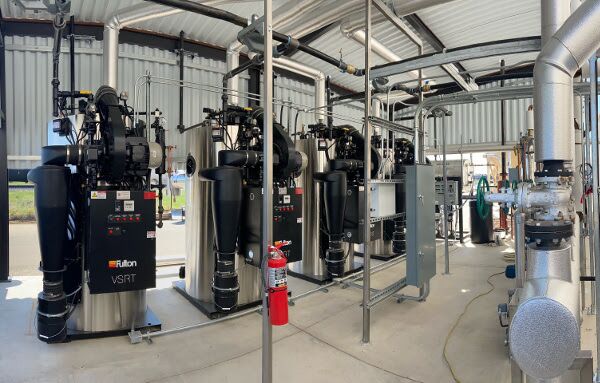
Every year, facility engineers across California shut down their heating boilers for the off-season — and every year, a significant number of those boilers come back online in the fall with corrosion damage, pitted waterside surfaces, or fireside scale that wasn’t there in the spring. The culprit, more often than not, isn’t equipment age or a failed component. It’s improper boiler layup during the shutdown period.
Choosing the right layup method (wet layup vs. dry layup) is one of the most consequential maintenance decisions a facility makes. Get it right, and your boiler returns to service in the fall exactly as you left it. Get it wrong, and you’re looking at repairs, reduced efficiency, or an unexpected outage the first week heating demand spikes.
This guide covers what wet layup and dry layup actually involve, when each method applies, and the specific steps required for each: oxygen scavenger use, nitrogen blanketing, and why desiccant selection matters more than most people realize in California’s humid coastal climates.
If you manage a California facility with seasonal heating demand, this is your seasonal boiler shutdown reference.
What Is Boiler Layup, and Why Does It Matter?
Boiler layup refers to the process of taking a boiler out of service and preserving it against corrosion damage during the idle period. The term covers both the shutdown procedure itself and the ongoing protection measures that keep the boiler in serviceable condition while it sits.
The reason layup matters comes down to chemistry. A boiler that’s simply drained and left open to the atmosphere is exposed to two primary corrosion mechanisms: oxygen attack on waterside metal surfaces, and moisture-driven corrosion on fireside surfaces. Both forms of damage are preventable with the right procedure, and both are expensive to remediate if they’re allowed to progress.
Bay City Boiler’s preventive maintenance program addresses layup as a standard part of planned seasonal transitions. The choice of method depends on how long the boiler will be offline, the facility’s water chemistry conditions, the equipment type, and the regional climate.
What Is Wet Layup?
Wet layup means keeping the boiler completely full of treated water during the idle period. The goal is to eliminate the oxygen-water interface that drives pitting corrosion — by removing all oxygen from the system and maintaining a protective water chemistry environment that keeps metal surfaces passivated.
When wet layup is appropriate:
- Shutdown duration of 30 days or less, or when the boiler may need to return to service quickly
- Facilities where the boiler room maintains a stable, above-freezing temperature (no risk of freeze damage)
- Systems with good water chemistry history and an established chemical treatment program
- Steam and hot water boilers where the waterside condition is sound
Wet layup procedure: key steps
Start with a full boiler inspection and waterside cleaning before initiating layup. You want to begin preservation with clean surfaces, not sealed-in scale or sludge.
Fill the boiler completely with no air pockets. The system should be 100% water-filled to eliminate the oxygen-water interface.
Add an oxygen scavenger to the boiler water. Sodium sulfite is the conventional choice for lower-pressure systems; hydrazine or DEHA (diethylhydroxylamine) are used in higher-pressure applications where volatile treatment is preferred. Your chemical treatment vendor should specify the correct dosage, typically enough to maintain a measurable residual throughout the layup period.
Raise the pH to the protective range (typically 10 to 11 for most steam boilers). Elevated pH forms a passive oxide layer on steel surfaces that significantly slows corrosion.
Circulate the treated water periodically if possible. Stagnant water stratifies, and oxygen scavenger concentration can deplete unevenly. Even a brief weekly circulation helps maintain uniform protection.
For extended shutdowns or facilities where the boiler may sit for several months, nitrogen blanketing is worth considering. Injecting dry nitrogen into the steam space above the water level displaces oxygen and maintains an inert atmosphere. It requires a nitrogen supply and pressure-rated connections, but it is the most reliable way to protect against oxygen ingress in a fully flooded system over a long idle period.
Test the boiler water at regular intervals, every two to four weeks for extended shutdowns. If oxygen scavenger residual drops or pH drifts out of range, re-treat before continuing.
What Is Dry Layup?
Dry layup means completely draining the boiler and keeping it dry, specifically dry enough to prevent condensation from forming on metal surfaces. The objective is the same as wet layup (preventing corrosion), but the approach is opposite: instead of eliminating oxygen access, you eliminate the moisture that oxygen needs to drive corrosion.
When dry layup is appropriate:
- Shutdown duration greater than 30 days, or when the return-to-service timeline is uncertain
- Facilities where there’s any risk of freezing temperatures in the boiler room
- Systems with known water chemistry problems such as scaling, high chloride levels, or prior oxygen pitting, where wet layup chemistry would be difficult to manage
- Watertube boilers and boilers with complex drum configurations where achieving complete flooding without voids is difficult
Dry layup procedure: key steps
Drain and flush the boiler thoroughly. All waterside surfaces should be clean before drying begins, because residual scale or deposits will absorb and hold moisture, undermining the entire dry layup approach.
Open all drain valves, vents, and inspection ports to allow airflow and complete drying. The goal is to remove all free moisture from every surface before sealing the unit.
Once the boiler is fully drained and dried, place desiccant trays inside the drums, headers, and any accessible internal cavities. Silica gel is the standard choice. The desiccant absorbs residual moisture vapor and maintains a dry internal atmosphere throughout the idle period.
Desiccant quantity matters. Undersizing the desiccant load is the most common dry layup failure mode, particularly in California’s humid coastal climates (Bay Area facilities, especially). A boiler that appears dry in April may be absorbing significant moisture vapor by July when marine layer humidity is at its peak. Calculate desiccant volume based on the internal surface area of the boiler, not just the water volume. Your boiler service provider should specify the loading rate.
Seal all openings after desiccant placement using blanks, plugs, or boiler-rated covers as appropriate. The goal is to prevent atmospheric moisture from continuously cycling through the boiler.
Check and replace desiccant at regular intervals. Silica gel changes color (from blue to pink in indicating grades) when it’s saturated. A saturated desiccant provides zero protection. For long shutdowns, plan on at least one desiccant replacement at the 90-day mark, and inspect monthly in high-humidity environments.
For fireside protection, inspect burner components and fireside surfaces for residual moisture or soot before sealing. A light coat of appropriate rust inhibitor on exposed metal surfaces in the firebox is worth applying if the boiler will be idle through a humid season.
How Do You Choose Between Wet Layup and Dry Layup?
The decision comes down to four variables: shutdown duration, freeze risk, water chemistry history, and how easily the boiler can be fully flooded.
Choose wet layup when the shutdown is short (less than 30 days), quick return-to-service is possible, freeze risk is zero, and your water chemistry program is solid with someone to monitor it.
Choose dry layup when the shutdown is extended or open-ended, freeze risk exists in the boiler room, water chemistry has been problematic, or the system is difficult to flood completely without air pockets.
When the choice isn’t obvious, consult your boiler service provider. Bay City Boiler’s team handles seasonal transitions as part of our Max Uptime™ maintenance program — and this decision is one of the cases where the cost of a wrong call shows up at fall startup, not during the shutdown itself.
One important note for California facilities: the right method varies significantly by location. A food processing plant in Fresno with a dry, hot off-season has different layup requirements than a biotech facility in South San Francisco with year-round marine humidity. Bay City Boiler’s statewide presence means our technicians understand these regional differences firsthand.
Common Layup Mistakes That Cause Fall Startup Failures
The ASME Boiler and Pressure Vessel Code doesn’t mandate a specific layup method, but it reinforces the overarching principle: preservation of pressure boundary integrity. The failures we most commonly see at fall startup trace back to a short list of avoidable errors.
For wet layup: failing to maintain oxygen scavenger residual throughout the idle period (the chemical depletes); allowing pH to drift below 9.5, which causes the passive oxide layer to break down rapidly; and partial flooding that leaves air pockets in steam drums or headers.
For dry layup: insufficient desiccant, especially in coastal California facilities; inadequate sealing after desiccant placement; and skipping the fireside inspection before sealing (condensation under a sealed firebox accelerates corrosion).
For both methods: skipping the waterside inspection before initiating layup (sealing in sludge or scale makes corrosion worse, not better) and inadequate documentation. The technician who opens the boiler in the fall may not be the one who closed it in the spring.
At Bay City Boiler, we document layup conditions, chemical readings, and desiccant load as part of our service record for every facility we maintain. That institutional knowledge is part of what the Max Uptime™ program is built on, so the fall startup team knows exactly what they’re working with.
Frequently Asked Questions
What is the difference between wet layup and dry layup for a boiler?
Wet layup keeps the boiler completely full of chemically treated water to prevent oxygen-driven corrosion, while dry layup drains the boiler completely and uses desiccants to prevent moisture from contacting metal surfaces. Wet layup is preferred for short shutdowns; dry layup is better for extended outages or environments with freeze risk.
How long can a boiler stay in wet layup?
With proper chemical treatment and regular monitoring, a boiler can remain in wet layup for several months. Oxygen scavenger levels and pH must be checked and maintained every two to four weeks. For shutdowns longer than 90 days, dry layup or nitrogen-assisted wet layup is typically more reliable.
Do I need to use an oxygen scavenger for wet boiler layup?
Yes. Oxygen scavenger is essential for wet layup, as it prevents pitting corrosion on waterside surfaces. Sodium sulfite is the standard choice for low-to-medium-pressure boilers. Your chemical treatment vendor should specify dosage based on system volume and target residual. Without it, dissolved oxygen will attack bare steel surfaces even in a fully flooded system.
How much desiccant do I need for dry boiler layup?
Desiccant load for dry layup should be calculated based on the internal surface area and the ambient humidity of the boiler room, not just the water volume. California coastal facilities typically require heavier desiccant loads than inland locations. Plan for at least one replacement at the 90-day mark, and inspect monthly. Saturated desiccant provides no protection.
Can I use nitrogen blanketing instead of wet layup?
Nitrogen blanketing is used as an enhancement to wet layup, not a replacement. The boiler is still flooded with treated water; nitrogen is injected into the steam space to displace oxygen and prevent ingress. It’s the most protective option for extended wet layup periods but requires appropriate equipment and a nitrogen supply. Bay City Boiler can assess whether it’s appropriate for your system.
What happens if I don’t follow proper boiler layup procedures?
Corrosion damage during improper layup is one of the leading causes of boiler failures at fall startup. Oxygen pitting on waterside surfaces reduces pressure boundary integrity and can require tube replacement. Fireside corrosion leads to scale buildup that reduces heat transfer efficiency. Both forms of damage are preventable, and both are significantly more expensive to repair than a properly executed layup.
Don’t Leave Your Boiler’s Off-Season to Chance
Proper boiler layup is the lowest-cost insurance you have against a fall startup failure. The right method, executed correctly, costs a fraction of what it takes to address corrosion damage after the fact.
Bay City Boiler manages seasonal boiler shutdowns across California, from the Bay Area to the Central Valley to Southern California. Our technicians understand the regional climate differences that affect layup method selection, and our preventive maintenance program includes documented layup procedures, chemical monitoring, and fall startup preparation as part of a complete stewardship approach to your steam systems.
If you’re approaching your seasonal boiler shutdown and want it done right, we’re ready to help. Get a maintenance quote and let Bay City Boiler manage your seasonal shutdown correctly. Call us at 800-8-LOW-NOX. We’re available 24/7.