Selecting between a fire tube vs water tube boiler is one of the most consequential equipment decisions a facility manager will make. The choice affects steam quality, operational efficiency, maintenance costs, and long-term reliability for years after installation. For California facilities operating under stringent emissions regulations and some of the highest natural gas prices in the country, getting this decision right matters even more. Bay City Boiler has guided facility managers across the state through this process since 1976, matching the right boiler design to each facility’s specific steam demands, space constraints, and regulatory requirements.
What Is the Difference Between a Fire Tube vs Water Tube Boiler?
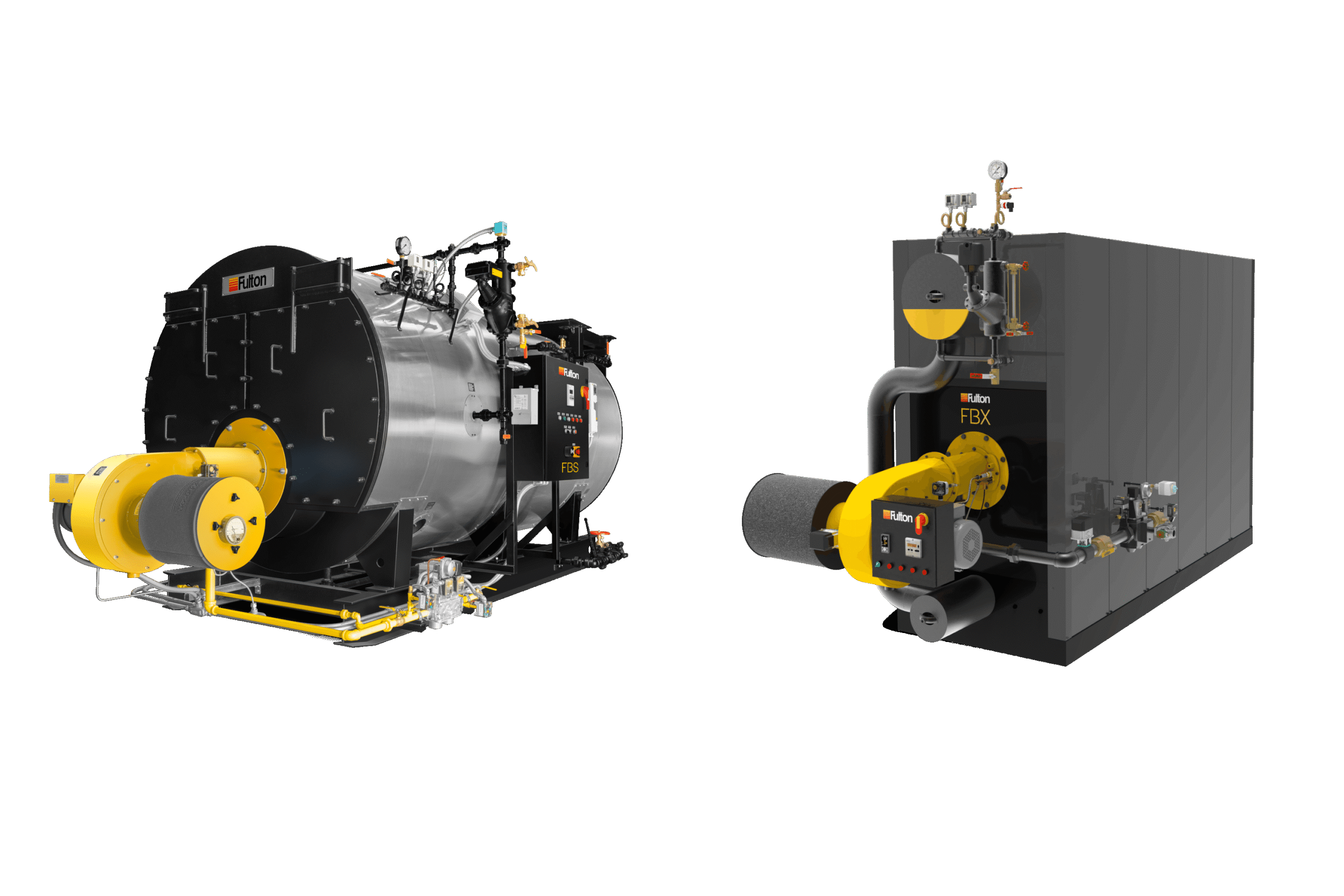
The fundamental difference comes down to which medium flows through the tubes. In a fire tube design, hot combustion gases travel through tubes surrounded by water. In a water tube design, water flows through tubes surrounded by hot combustion gases. This structural distinction drives nearly every performance characteristic that matters to your operation.
Fire tube boilers contain the water and steam inside a large cylindrical shell, with combustion gases passing through tubes running the length of that shell. Heat transfers from the gas through the tube walls into the surrounding water. Water tube boilers reverse this arrangement: water circulates through smaller-diameter tubes while combustion gases flow around their exterior. Each configuration creates different advantages and limitations for pressure capacity, steam output, response time, and physical footprint.
Understanding the fire tube vs water tube boiler distinction is the starting point for a confident equipment decision. The sections below break down how each design works, compare their performance characteristics, and outline which applications favor which type.
How a Fire Tube Boiler Generates Steam
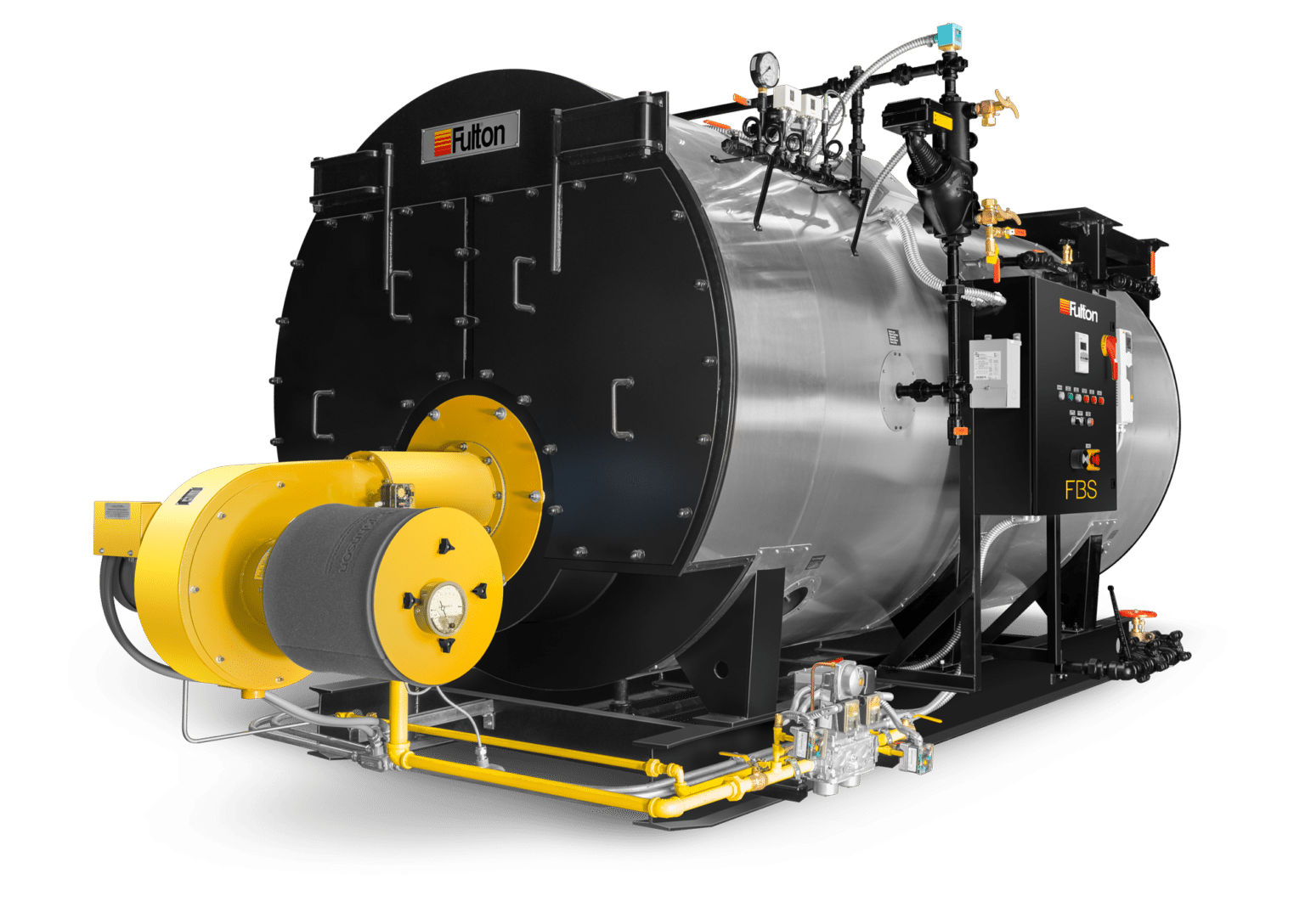
A fire tube boiler operates on a straightforward principle. A burner fires into a large cylindrical furnace (the Morrison tube), and the hot gases then reverse direction and pass through banks of smaller tubes submerged in water. Most modern fire tube units use a three-pass or four-pass design, meaning the gases travel the length of the boiler multiple times before exhausting through the stack. Each additional pass transfers more heat into the water, increasing overall thermal efficiency.
Fire tube boilers hold a large volume of water relative to their steam output. This thermal mass acts as an energy reservoir, providing stable steam pressure during moderate load variations. For facilities with relatively steady steam demand, this characteristic reduces the frequency of burner cycling and helps maintain consistent steam quality throughout the operating day.
These boilers are widely used in commercial and light industrial applications across California. They are well suited for food processing operations, laundries, hospitals, and facilities with steam requirements up to approximately 800 boiler horsepower (roughly 27,600 lbs/hr of steam). Their compact footprint makes them easier to transport and install in existing boiler rooms, and they generally require less complex water treatment programs than their water tube counterparts.
Maintenance is also more straightforward. Fire tube boilers have fewer components and simpler internal geometry, which means routine boiler service can often be completed faster and with less specialized tooling. Tube inspection and replacement, when needed, is a manageable process for experienced technicians familiar with the design.
How a Water Tube Boiler Generates Steam
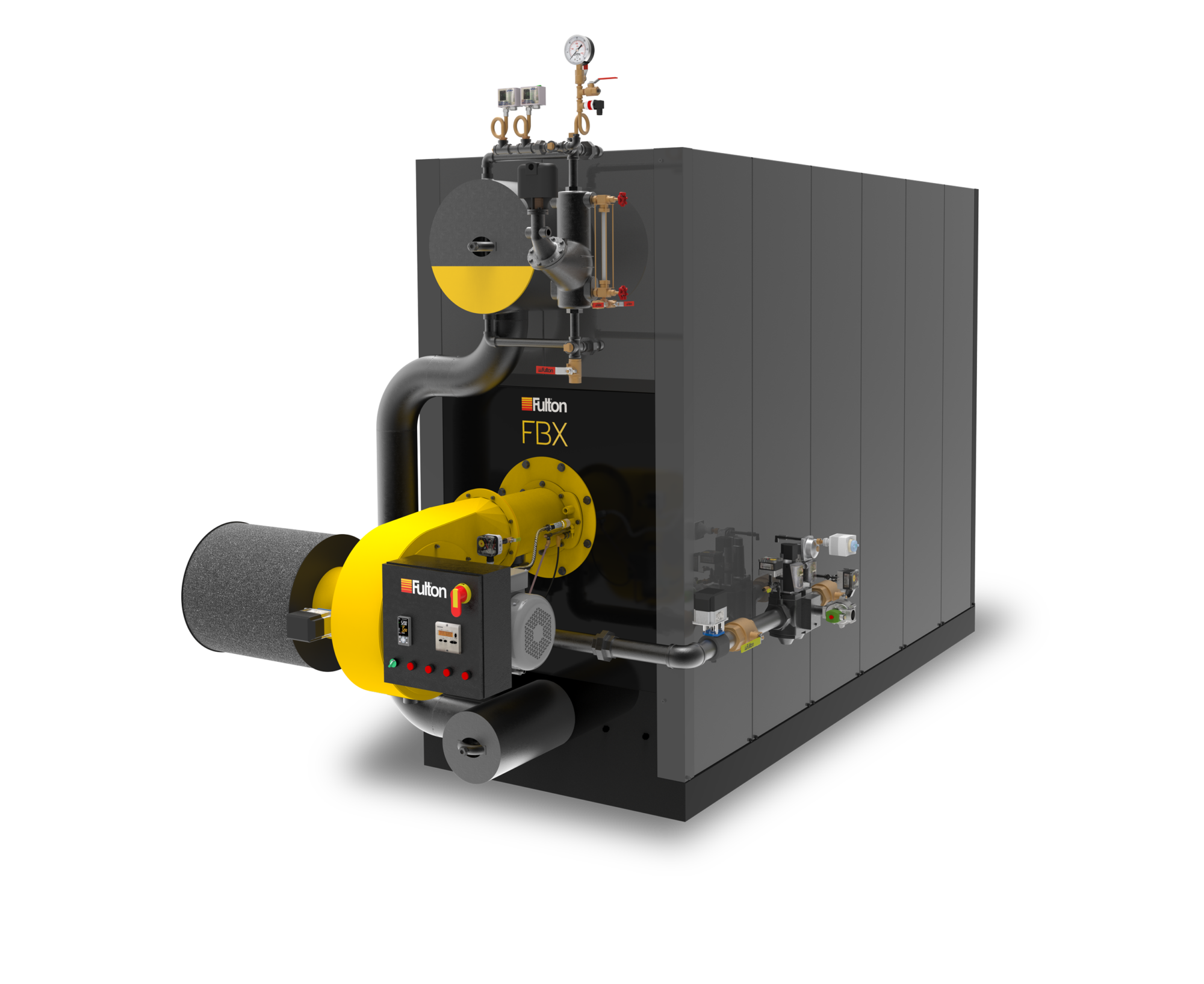
A water tube boiler circulates water through a network of tubes arranged within a furnace enclosure. The burner fires into an open combustion chamber, and the hot gases flow across the exterior of the tubes, transferring heat into the water inside. Steam collects in an upper drum while feedwater enters through a lower drum, creating natural or forced circulation patterns that move water continuously through the system.
Because water tube boilers contain far less water per unit of steam output, they respond faster to changes in demand. When a facility needs to ramp from low load to high load quickly, a water tube boiler follows that demand curve with significantly less lag. This responsiveness is critical for process-driven operations where steam requirements fluctuate throughout a production cycle.
Water tube designs dominate high-pressure, high-capacity applications. They routinely operate at pressures exceeding 250 psi and produce steam outputs well beyond what fire tube configurations can achieve. Power generation, large-scale chemical processing, and heavy industrial operations typically require water tube boilers for these reasons.
The trade-off is complexity. Water tube boilers require more rigorous preventive maintenance programs, more sophisticated water treatment chemistry, and more experienced technicians for service and repair. Their internal geometry makes inspections and tube work more time-intensive. For facilities with the engineering staff and maintenance infrastructure to support them, water tube boilers deliver performance that fire tube designs cannot match at scale.
Comparing Commercial Boiler Types: Efficiency, Capacity, and Response Time
When evaluating the fire tube vs water tube boiler decision, three performance factors typically drive the choice: thermal efficiency, steam capacity, and load response time. Understanding how each design performs across these categories helps narrow the field before site-specific factors come into play.
Thermal efficiency. Modern fire tube boilers commonly achieve 80-84% thermal efficiency in standard configurations. Adding a feedwater economizer can push efficiency above 90% by recovering heat from exhaust gases to preheat incoming feedwater. Water tube boilers achieve comparable base efficiency ratings, and their ability to incorporate additional heat recovery surfaces can yield incremental improvements at very large scales. For most commercial applications, the efficiency gap between the two designs is small enough that other factors carry more weight in the decision. The ENERGY STAR program for commercial boilers provides additional benchmarks for evaluating high-efficiency equipment.
Steam capacity and pressure. Fire tube boilers serve the majority of commercial and light industrial facilities in California effectively. They are practical and cost-effective up to approximately 800 BHP. Beyond that threshold, water tube boilers become the stronger choice, offering higher steam output and the ability to operate at pressures that fire tube designs cannot safely sustain. Facilities requiring superheated steam or operating above 250 psi will almost always need a water tube configuration.
Load response. Water tube boilers respond faster to demand changes because of their lower water volume per unit of output. If your operation involves rapid load swings, frequent startups and shutdowns, or batch processing cycles, water tube designs handle those conditions more effectively. Fire tube boilers excel where loads are steady and predictable, providing the kind of stable, consistent steam output that many commercial steam operations depend on.
The U.S. Department of Energy’s Steam Challenge program offers additional technical guidance on boiler selection, system optimization, and efficiency benchmarks for industrial facilities evaluating steam equipment.
Which Boiler Design Fits Your California Facility?
The fire tube vs water tube boiler decision is not a matter of one design being universally superior. It depends on your facility’s specific operating conditions, and getting that match right prevents years of performance compromises, excess fuel costs, and avoidable maintenance burden.
A fire tube boiler is likely the right choice if:
- Your steam requirements fall below 800 BHP
- Operating pressures stay below 250 psi
- Steam demand is relatively stable throughout the day
- Boiler room space is limited and you need a compact, transportable unit
- Your maintenance team or service partner handles standard commercial boiler work
A water tube boiler is likely the right choice if:
- Steam demand exceeds 800 BHP or your process requires high-pressure steam
- Load swings are rapid or unpredictable during production cycles
- Your process requires superheated steam
- You have engineering staff or a dedicated boiler maintenance program to support more complex equipment
- Long-term capacity growth is planned and you need room to scale
California facilities also need to account for emissions compliance when selecting either design. Both fire tube and water tube boilers are available with low NOx and ultra-low NOx burners to meet BAAQMD, SCAQMD, SJVAPCD, and SMAQMD requirements. The air district governing your region sets the allowable NOx limits, and Bay City Boiler’s team navigates these permitting requirements across all four regulatory districts statewide.
As one Bay City Boiler customer described their experience: “Excellent customer service and very responsive. All of the technicians are skilled, well trained, and professional. If you are looking for a boiler company to take care of all of your needs, look no further.”
When to Consider Boiler Replacement in California
Even a well-maintained boiler reaches a point where repair frequency, efficiency losses, and compliance requirements make replacement the smarter path forward. If you are already evaluating fire tube vs water tube boiler options, that likely means your facility is expanding capacity, addressing recurring reliability problems, or facing an emissions compliance deadline.
Boiler replacement in California carries considerations that facilities in other states may not face. Permitting timelines vary significantly by air district and municipality. San Francisco, in particular, involves complex municipal permitting that can extend project schedules if not planned properly. Bay City Boiler’s replacement and installation team manages the full scope: equipment selection, system design, permitting navigation, mechanical installation, and startup commissioning.
During a replacement project, maintaining steam supply is often non-negotiable for production facilities. Bay City Boiler’s rental boiler fleet provides bridge capacity so operations continue without interruption while the new system is installed and commissioned. With technicians and offices in the Bay Area, Central Valley, Fresno, and Southern California, our team has managed boiler replacements for hospitals, food processing plants, breweries and distilleries, and research laboratories across the state.
Frequently Asked Questions
Which is safer, a fire tube or water tube boiler?
Both designs are safe when properly installed, maintained, and operated within their rated parameters. Fire tube boilers contain a larger volume of water under pressure, which means a catastrophic failure releases more stored energy. Water tube boilers hold less water at any given pressure, reducing the severity of a potential failure event. In practice, modern safety controls, regular inspections, and a disciplined maintenance program are far more important to safe operation than the boiler type itself.
Can I switch from a fire tube to a water tube boiler in my existing boiler room?
It depends on available space and existing infrastructure. Water tube boilers often have different footprints, piping configurations, and electrical requirements than fire tube units. A site assessment by an experienced steam systems team will determine what modifications are needed and whether the conversion is practical. In many cases, the transition is straightforward with proper planning and engineering.
How long does a typical boiler replacement take in California?
Timelines vary based on equipment size, site conditions, and permitting requirements. A straightforward commercial replacement may take several weeks from equipment order to startup, while larger industrial projects can span several months. Air district permitting is often the longest lead-time item. Bay City Boiler manages the permitting process alongside equipment procurement to keep projects on schedule and minimize downtime.
Do fire tube and water tube boilers require different maintenance?
Yes. Fire tube boilers generally require less complex maintenance due to their simpler internal construction and accessible tube geometry. Water tube boilers demand more rigorous water treatment, more frequent tube inspections, and technicians experienced with their specific configurations. Both designs benefit from a structured maintenance approach like Bay City Boiler’s Max Uptime™ program, which builds institutional knowledge of your specific equipment and prevents the kind of unplanned failures that create costly downtime.
Choosing between a fire tube vs water tube boiler is a decision that shapes your facility’s reliability, efficiency, and operating costs for the long term. Bay City Boiler’s steam systems specialists work with facility managers across California to evaluate operating conditions, navigate emissions compliance, and select the boiler design that fits your operation. Talk to a steam systems expert. Call 800-8-LOW-NOX.